ASPECTS OF ANCIENT GREEK CULT III: CULTS AND ARCHITECTURE AT THE SOUTH SLOPE OF THE ATHENIAN AKROPOLIS
Date & Time
Tuesday, March 3rd
13:00 – 17:00
Location
The Danish Institute at Athens (3 March) & The Acropolis Museum (4-5 March)
Information
An international colloquium, 3-5 March 2026, Athens
The Danish Institute at Athens (DIA), The Ephorate of Antiquities of the City of Athens and the Directorate for the Restoration of Ancient Monuments, Hellenic Ministry of Culture and the Danish Institute for Mediterranean Studies (DIOMEDES) cordially invite all interested to participate in the first international conference dedicated to the architectural monuments and cults of the South Slope of the Athenian Akropolis.
The South Slope of the Athenian Akropolis
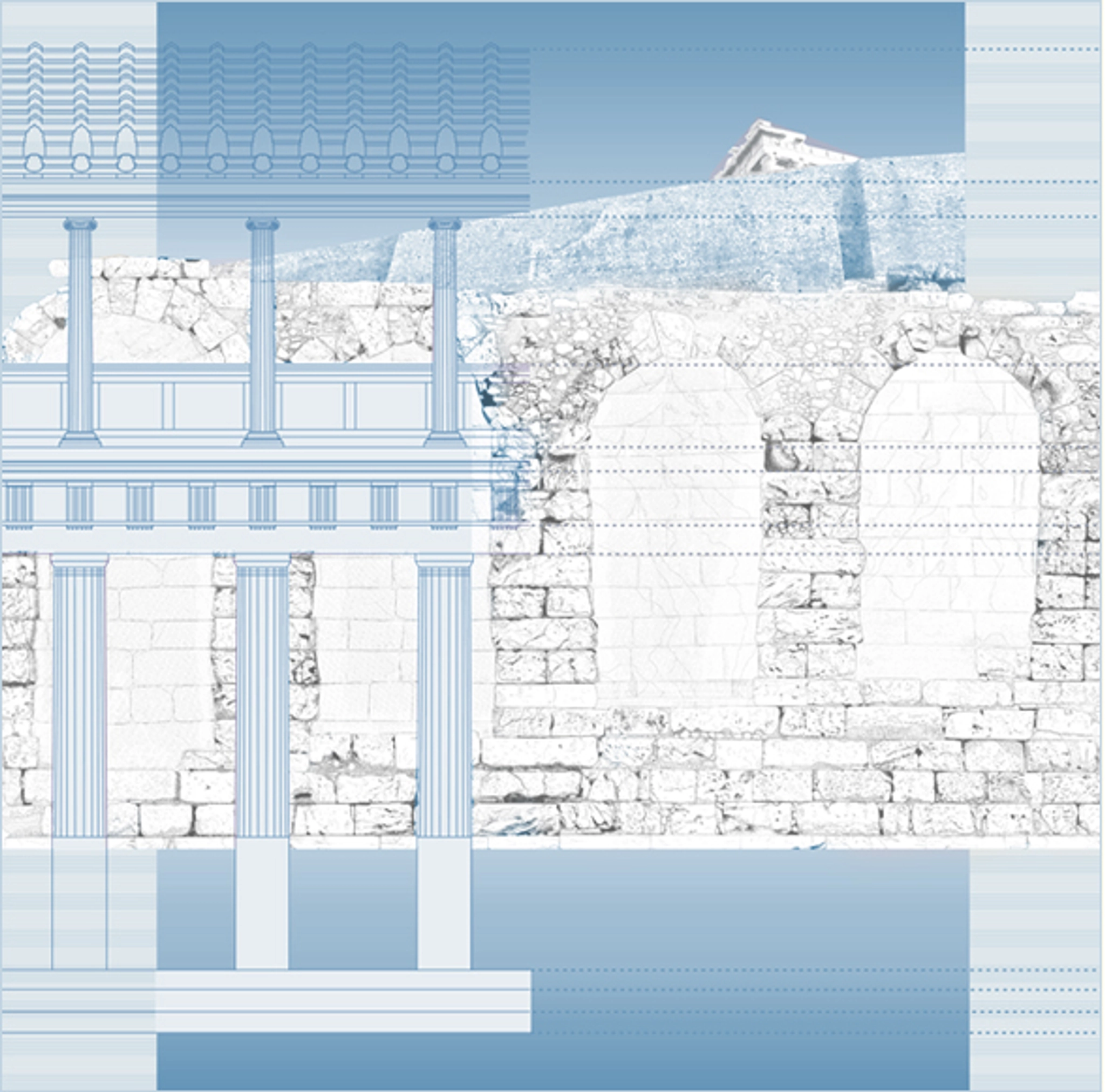
Today, the South Slope is one of the world’s most visited tourist destinations from the ancient Greek world. It was here that the world’s first permanent theatre building was built in the Sanctuary of Dionysos Eleuthereus. It was one of the most important locations for visual culture with statues of important Athenian citizens and Greek deities, statues that were master works of the most famous sculptors of the time like Alkamenes and Praxiteles. These works of art were described and praised by ancient authors like the rhetor and sophist Kallistratos (living during the late 4th or early 5th century AD), who composed a unique series of descriptions (Ἐκφράσεις) of 14 works of art, mostly statues set up on the South Slope and especially in the Sanctuary of the Dionysos Eleuthereus.
It was also in this theatre plays by legendary dramatic playwrights like Aeschylus, Sophokles, Euripides and Aristophanes were performed during the annual festival in March to the wine god, the Great Dionysia. The winners of the dithyrambic and dramatic competitions were paying extreme amounts of money to famous sculptors and craftsmen to create victory monuments erected along the Street of Tripods, thereby forever being immortalized.
Just like in ancient times, the tourists today also visit the well-preserved and reconstructed Herodion on their way up to the Propylaia of the Akropolis. If walking from the Theatre of Dionysos Eleuthereus, tourists would visit the terrace above the Stoa of Eumenes II with the ancient sanctuary of the medicine god Asklepios with its two temples (ἀρχαῖοςναός and ναός) and the Doric Stoa with the monumental βόθρος. If they were going around west of the theatre towards the East and North Slopes of the Akropolis, the ancient tourist before and after the time of Pausanias would visit tombs of mythical heroes such as Halirrhothios, Talos or Kalos and Hippolytos showing the importance of the South Slope’s many ancient cults.
The South Slope was in ancient times the primary location for entertainment of the Athenian citizens with the theatre, the stadion (before the Stoa of Eumenes II), Perikles’ Odeion and later in the Roman period, yet another concert hall, the Herodion (AD 161). But the South Slope was just as important for the many ancient cults worshipped by the Athenian citizens with sanctuaries of Aphodite, Asklepios, the Nymphs and Pan, Dionysos and later foreign cults such as Kybele and Isis.
Therefore, it is now time for the first international colloquium to investigate the ancient architecture, sculpture, inscriptions and cults of the South Slope of the Akropolis. As the ancient city state of Athens used the South Slope as a place where it promoted Athenian architecture, literature, music, performance arts, plastic arts and philosophy to the whole Mediterranean world, we will now study aspects of ancient Greek cults and its architecture in Athens.
Keynote Speakers
Robin Osborne (Cambridge University)
Annarita Doronzio (Humboldt Universität zu Berlin)
Bronwen L. Wickkiser (Hunter College)
Elisavet P. Sioumpara (Service for the Restoration of the Acropolis Monuments, Hellenic Ministry of Culture)
George Hinge (University of Aarhus)
Jessica Paga (College of William & Mary)
Speakers
Jessica Lamont (Yale University)
Constanze Graml (Universität Trier)
Jesper Tae Jensen (Danish Institute for Mediterranean Studies)
Konstantinos Boletis (Athens)
Aeneas Kapouranis (National and Kapodistrian University of Athens)
Ariadne Klonizaki (Hellenic National Archaeological Museum)
Michaelis Lefantzis (Directorate for the Restoration of Ancient Monuments, Hellenic Ministry of Culture)
Wanda Papaefthymiou (Hellenic National Archaeological Museum)
Christina Papastamati-von Moock (Ephorate of Antiquities of the City of Athens, Hellenic Ministry of Culture)
Alessio Galli (Scuola Normale Superiore, Pisa & Scuola Archeologica Italiana di Atene (SAIA)
Kazuhiro Takeuchi (Danish Institute for Mediterranean Studies)
Scientific Committee
Denise A. Demetriou
Gerry and Jeannie Ranglas Chair in Ancient Greek History, Co-Director of Center for Hellenic Studies, Department of History, University of California, San Diego (2022-2025) & Elizabeth A. Whitehead Distinguished Scholar of the American School of Classical Studies at Athens (2025-2026)
Alexander Mazarakis Ainian
Director of the Excavation at the Ancient Capital of Kythnos & Professor of Classical Archaeology, Department of History, Archaeology and Social Anthropology, University of Thessaly, Volos
Vassilis Lambrinoudakis
Professor Emeritus, Department of History and Archaeology, National and Kapodistrian University of Athens
Andreas I. Darlas
Director, Ephorate of Palaeoanthropology-Speleology, Hellenic Ministry of Culture, Athens
Mark Wilson Jones
Visiting Professor, Ax:son Johnson Centre for the Study of Classical Architecture, Faculty of Architecture and History of Art, University of Cambridge, UK
Conference Sponsors
Danish Institute at Athens (DIA)
Ephorate of Antiquities of the City of Athens & Directorate for the Restoration of Ancient Monuments, Hellenic Ministry of Culture
Acta Archaeologica, Brill, Leiden
Carlsberg Foundation
Phasis: Greek and Roman Studies
Wilhelm Malling (an international law firm), Nuuk, Greenland
Kroer\Fink Advokater (an international law firm), Copenhagen
Danish Institute for Mediterranean Studies (DIOMEDES), Copenhagen
Program
DAY 1
DANISH INSTITUTE AT ATHENS (DIA)
15.15-16.00 Welcome: Sanne Hoffmann, Director, Danish Institute at Athens (DIA)
Søren Kroer, Chair of the Board of Directors, DIOMEDES
Michaelis Lefantzis, Head, Department of Studies of Ancient Monuments, Directorate for the Restoration of Ancient Monuments, Hellenic Ministry of Culture
Jesper Tae Jensen, Executive Director, Danish Institute for Mediterranean Studies (DIOMEDES)
PART I: CULTS AT THE SOUTH SLOPE OF THE AKROPOLIS
Chair: Sanne Hoffmann
Director, Danish Institute at Athens (DIA)
16.00-16.30 Tracing the Expanding Impact of Asklepios’ Cult in Votive Reliefs: From the South Slope to the Peloponnese
Aeneas Kapouranis
Department of Classical Archaeology, National and Kapodistrian University of Athens
16.30-17.00 Inter theatra Bacchi et Herodis - Tribal Decrees and Cults on the South Slope of the Akropolis
Kazuhiro Takeuchi
Danish Institute for Mediterranean Studies (DIOMEDES)
17.00-17.45 Coffee/Tea
Chair: Bronwen L. Wickkiser
Solomon Bluhm Professor of Ancient History, Department of Classical and Oriental Studies, Hunter College
17.45-18.15 Inscribed Architraves from the Southern Slopes of the Akropolis
Alessio Galli
Scienze dell’antichità, Scuola Normale Superiore (Pisa) & Scuola Archeologica Italiana di Atene (SAIA)
18.15-19.00 Keynote talk: Paeans in the Athenian Asklepieion on the South Slope of the Athenian Akropolis
George Hinge
Department of History and Classical Studies, Aarhus University
DAY 2
AMPHITHEATER, ACROPOLIS MUSEUM
9.30-10.00 Welcome
Michaelis Lefantzis & Jesper Tae Jensen
Chair: Jesper Tae Jensen
Executive Director, Danish Institute for Mediterranean Studies (DIOMEDES)
10.00-10.45 Keynote talk: Getting Married in Seventh Century BC Athens: Female Cults on the South Slope of the Akropolis
Annarita Doronzio
Director of the Siris-Project, Excavation in South Italy & Wissenschaftliche Mitarbeiterin, Institut für Klassische Archäologie, Winckelmann-Institut Humboldt Universität zu Berlin
10.45-11.15 Classical Physicians and the Sanctuary of Asklepios on the South Slope of the Athenian Akropolis
Jessica Lamont
Assistant Professor of Classics and History, Department of Classics, Yale University
11.15-11.45 “Please Take a Seat:” Reading the Prohedria of the Theatre of Dionysos Eleuthereus Diachronously against the Cult Topography of Athens and Attika
Constanze Graml
Curator, Original- und Abgusssammlung, Universität Trier
11.45-13.30 LUNCH
Chair: Denise Demitriou
Gerry and Jeannie Ranglas Chair in Ancient Greek History
University of California, San Diego
Elizabeth A. Whitehead Distinguished Scholar of the American School of Classical Studies at Athens
13.30-14.15 Keynote talk: The Character of the South Slope of the Akropolis and the Geography of Cult in Athens and Attika
Robin Osborne, Emeritus Professor of Ancient History, Fellow at King’s College
Cambridge University
PART II: ARCHITECTURE, MONUMENTS AND SPACE AT THE SOUTH SLOPE
14.15-14.45 The “Ἀρχαῖος Ναός” of Asklepios on the South Slope of the Athenian Akro polis: A New Temple Re-Discovered in Athens
Jesper Tae Jensen, Executive Director Danish Institute for Mediterranean Studies (DIOMEDES)
14.45-15.45 Coffee/Tea
Chair: Vasileios Lambrinoudakis, Professor Emeritus, Department of History and Archaeology, National and Kapodistrian University of Athens
15.45-16.30 Keynote talk: Sanctuaries, Walls and Workshops as Turning Points in Terri torial Formation at the South Slope of the Athenian Akropolis
Elisavet P. Sioumpara
Head of Project of the Membra Disiecta of the Akropolis, Service for the Restoration of the Acropolis Monuments, Hellenic Ministry of Culture
16.30-17.00 The Stoa of Eumenes II: An Architecture of Transition from the Sacred to the Public Space at the South Slope of the Akropolis
Michaelis Lefantzis
Head of Department of Studies of Ancient Monuments, Directorate for the Restoration of Ancient Monuments, Hellenic Ministry of Culture
DAY 3
AMPHITHEATER, ACROPOLIS MUSEUM
Chair: Michaelis Lefantzis
Head of the Department of Studies of Ancient Monuments, Directorate for the Restoration of Ancient Monuments, Hellenic Ministry of Culture
10.00-10.30 Investigating Archaeological Evidence of the Roman Imperial Presence in Athenian Theatre
Christina Papastamati-Von Moock
Archaeologist, Ephorate of Antiquities of the City of Athens, Hellenic Ministry of Culture
10.30-11.00 The Diachronic Use of the Cave of the Choregic Monument of Thrasyllos above the Theatre of Dionysos Eleuthereus
Konstantinos Boletis
Restoration architect
Chair: Robin Osborne
Emeritus Professor of Ancient History, Fellow at King’s College
Cambridge University
11.00-11.30 A New Honorific Statue of a Roman Togatus from the Asklepieion at the South Slope of the Athenian Akropolis
Wanda Papaefthymiou, Head of Department of Communication Hellenic National, Archaeological Museum
11.30-12.15 Keynote talk: Embodied Witnessing in the Theatre of Dionysos Eleuthereus, Athens
Jessica Paga
Gale & Steven Kohlhagen, Associate Professor of Classical Studies, Department of Classical Studies, College of William & Mary
12.15-13.45 LUNCH
PART III: ASKLEPIOS AND BEYOND
Chair: Mark Wilson Jones
Visiting Professor
Ax:son Johnson Centre for the Study of Classical Architecture, Faculty of Architecture and History of Art, University of Cambridge
13.45-14.30 Keynote talk: Healthy Stones | λίθοι ὑγιεῖς: Architecture and Health on the Akropolis (and Beyond)
Bronwen L. Wickkiser
Solomon Bluhm Professor of Ancient History, Department of Classical and Oriental Studies, Hunter College
14.30-15.00 Transfer of the Cult of Asklepios and Establishment of Subsidiary Sanctuaries: Mechanisms, Public and Private Initiative and Founders (5th-3rd centuries BC)
Ariadne Klonizaki
Head of Department for Education, Hellenic National Archaeological Museum
15.00-15.30 Conclusion of the Colloquium
George Hinge
Department of History and Classical Studies, Aarhus University