Background and Previous Research
The site of Pangali was first identified in 1995 during the documentation of Classical fortification walls on the plateau. A limited excavation carried out in 1996 revealed well-preserved deposits dated to the transition between the Late and Final Neolithic (second half of the 5th millennium BC). The assemblage included pottery, chipped stone tools in flint and obsidian, ground stone objects, faunal remains, marine shells, and a hearth structure, indicating domestic occupation.
Despite the significance of these findings, only a very small part of the site was investigated, leaving considerable potential for further research.
The 2025 Campaign
In 2025, a new programme of investigation was initiated as the first phase of a five-year research project. The campaign combined systematic surface survey with digital documentation, including drone-based photogrammetry and high-resolution spatial recording.
The survey demonstrated dense distributions of archaeological material across the terraces, including pottery, chipped stone, and ground stone objects. These results confirm that substantial and well-preserved deposits remain in situ across the site.
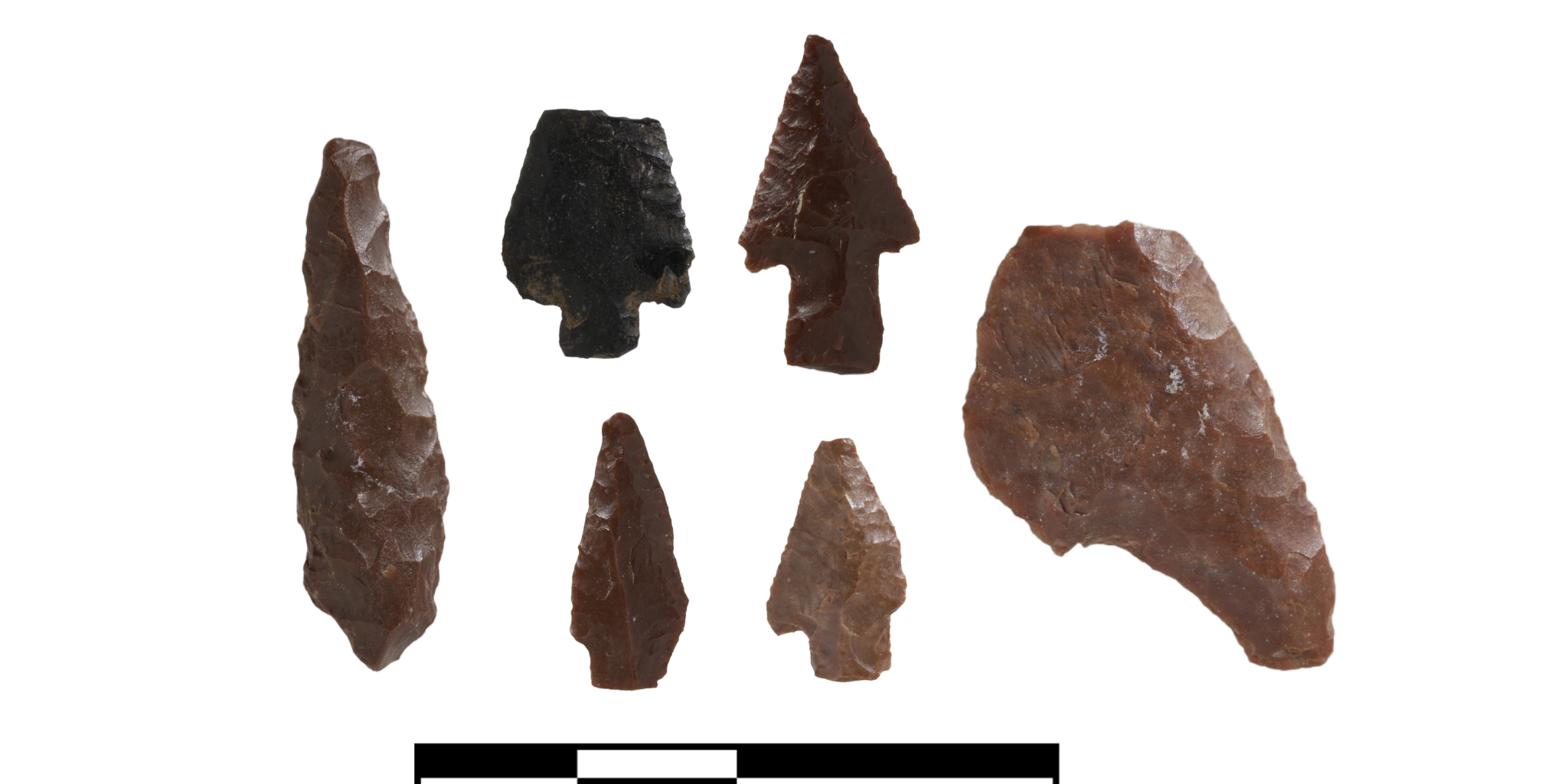
Among the finds were additional tanged points in obsidian and chert, complementing the material recovered in 1996 and further indicating a diversified subsistence economy combining farming, herding, and hunting.
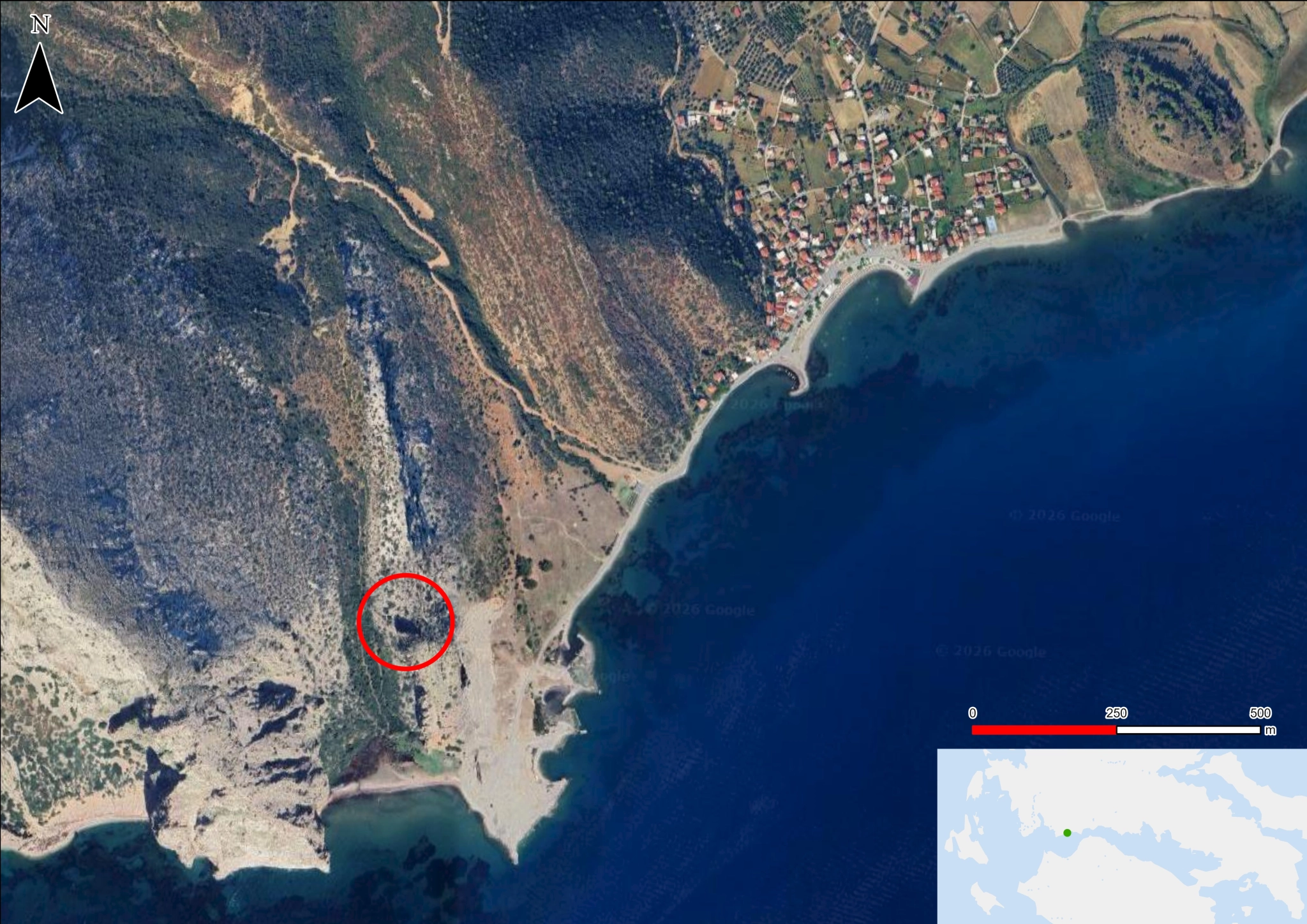
Figure 1 - Satellite image showing the location of Pangali. (Background: Google Satellite, Map: Frederik Vingaard © Project Pangali).
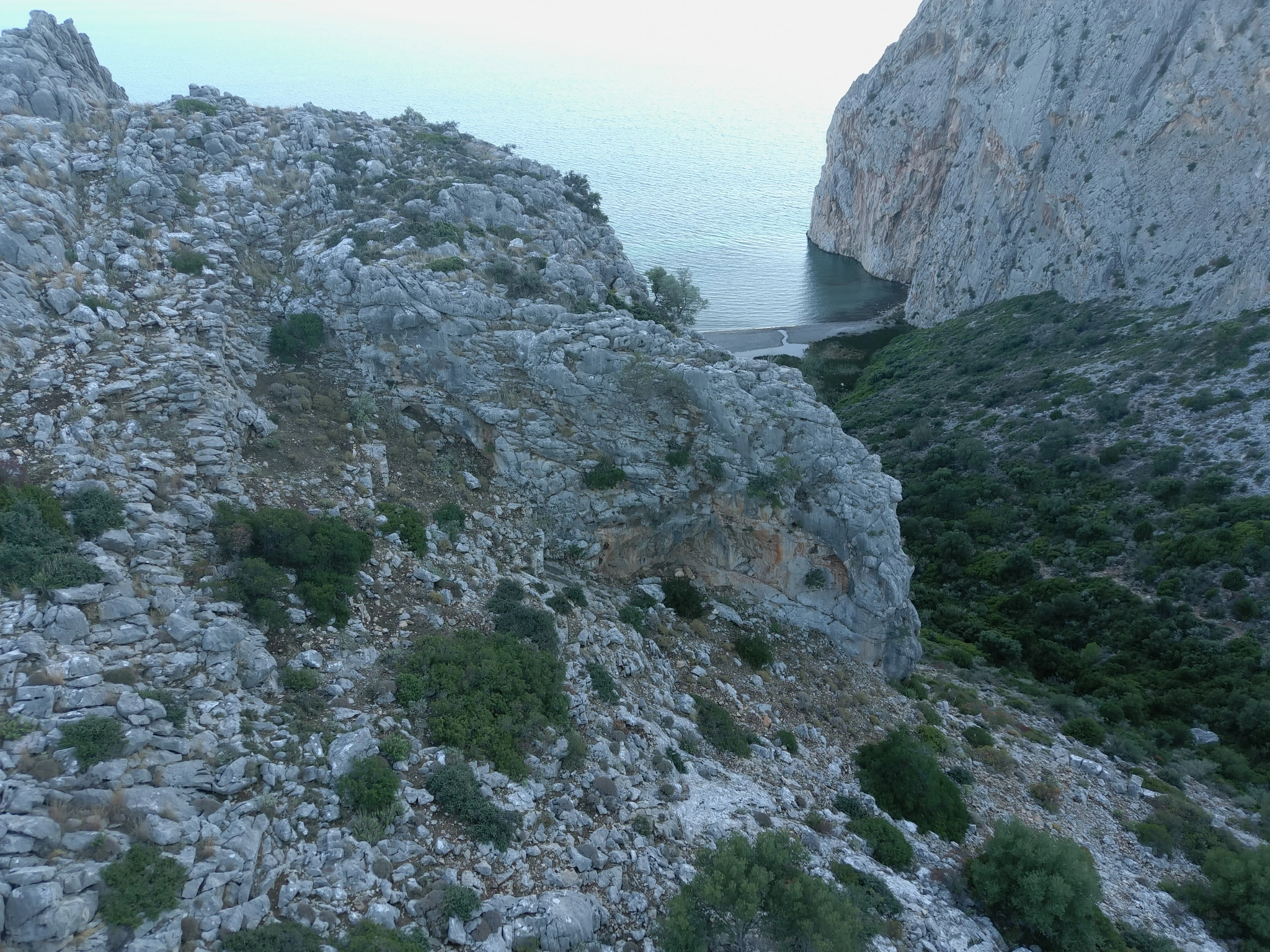
Figure 2 – Drone photograph of the site in front of the projecting bedrock from the north. Late-Final Neolithic occupation is observed on all three terraces (Photo: Frederik Vingaard © Project Pangali).
Research Aims
The project aims to investigate the role of Pangali within the Late–Final Neolithic transition in western Greece, with particular emphasis on:
- settlement organisation and site function
- subsistence strategies and resource use
- technological practices, including lithic and textile production
- participation in regional and interregional exchange networks
The presence of obsidian, and Balkan flint suggests that Pangali was integrated into wider exchange systems linking the Aegean and the Balkans.
Future Work
Future fieldwork will focus on targeted excavation combined with environmental sampling, including archaeobotanical and zooarchaeological analyses. These studies aim to clarify whether the site represents a permanent settlement or a more seasonal occupation within a broader settlement network.
Geochemical analyses, including pXRF and FTIR, will be used to investigate the provenance of raw materials and further explore Pangali’s role within long-distance exchange networks.
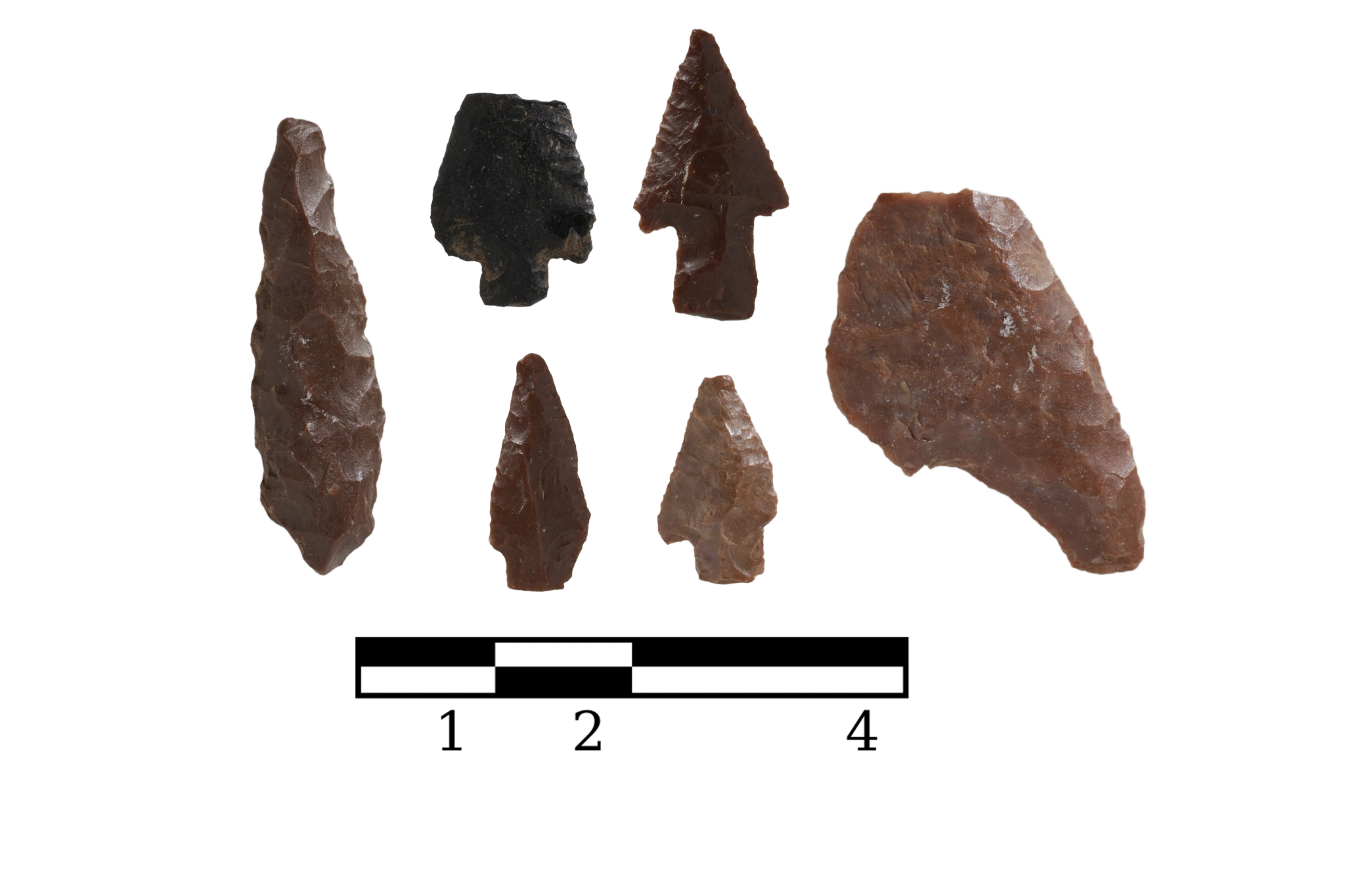
Figure 3 – Selection of points of chert, radiolarite and obsidian found at the site. (Photo: Frederik Vingaard © Project Pangali).
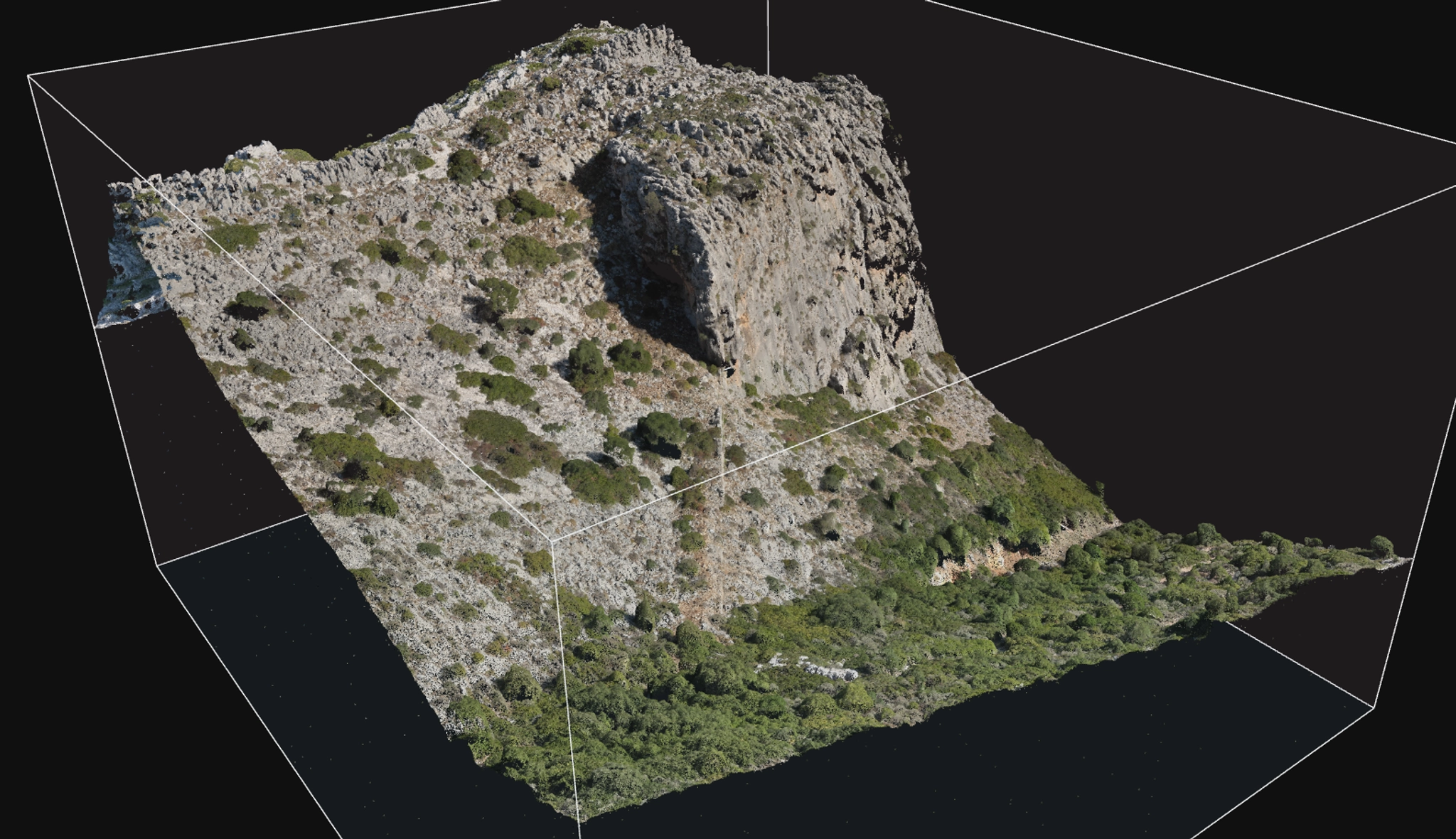
Figure 4 – Textured model of the site generated from drone imagery. (Model: Frederik Vingaard © Project Pangali).
Contact person
Frederik Vingaard
Assistant Director of Project Pangali
Department of Archaeology and Natural Sciences
The National Museum of Denmark
fvra@natmus.dk
Acknowledgments
Project Pangali has received continuous support from the Ephorate of Antiquities of Aetoloacarnania and Lefkada, the Danish Institute at Athens and the National Museum of Denmark, to all of whom we are extremely grateful. We are likewise indebted to the Hellenic Ministry of Culture for granting permission to carry out the archaeological research programme and excavation for the period 2025-2029. We further gratefully acknowledge the generous support of Christian og Emma Blinkenbergs Rejselegat, which has enabled early-career scholars to participate in the project. Finally, we wish to express our sincere appreciation to the inhabitants of Kato Vasiliki, Evinochori, and Krioneri for welcoming us back with such warmth and hospitality.